


Meet The Jury Panel
Meet the distinguished panel of global leaders, visionaries, and pioneers tasked with evaluating and celebrating the next generation of African excellence.

Kwame-Michael Brako
Creative Director & VFX Artist
Jacqueline Ward-Brew
Educator & Curriculum Specialist
Jasmine Rand
International Human Rights Attorney
Caroline K. Rushingwa, MPP
International Education & Partnerships Strategist
Dr. Mikidadu Mohammed
Chief Economist & Academic Leader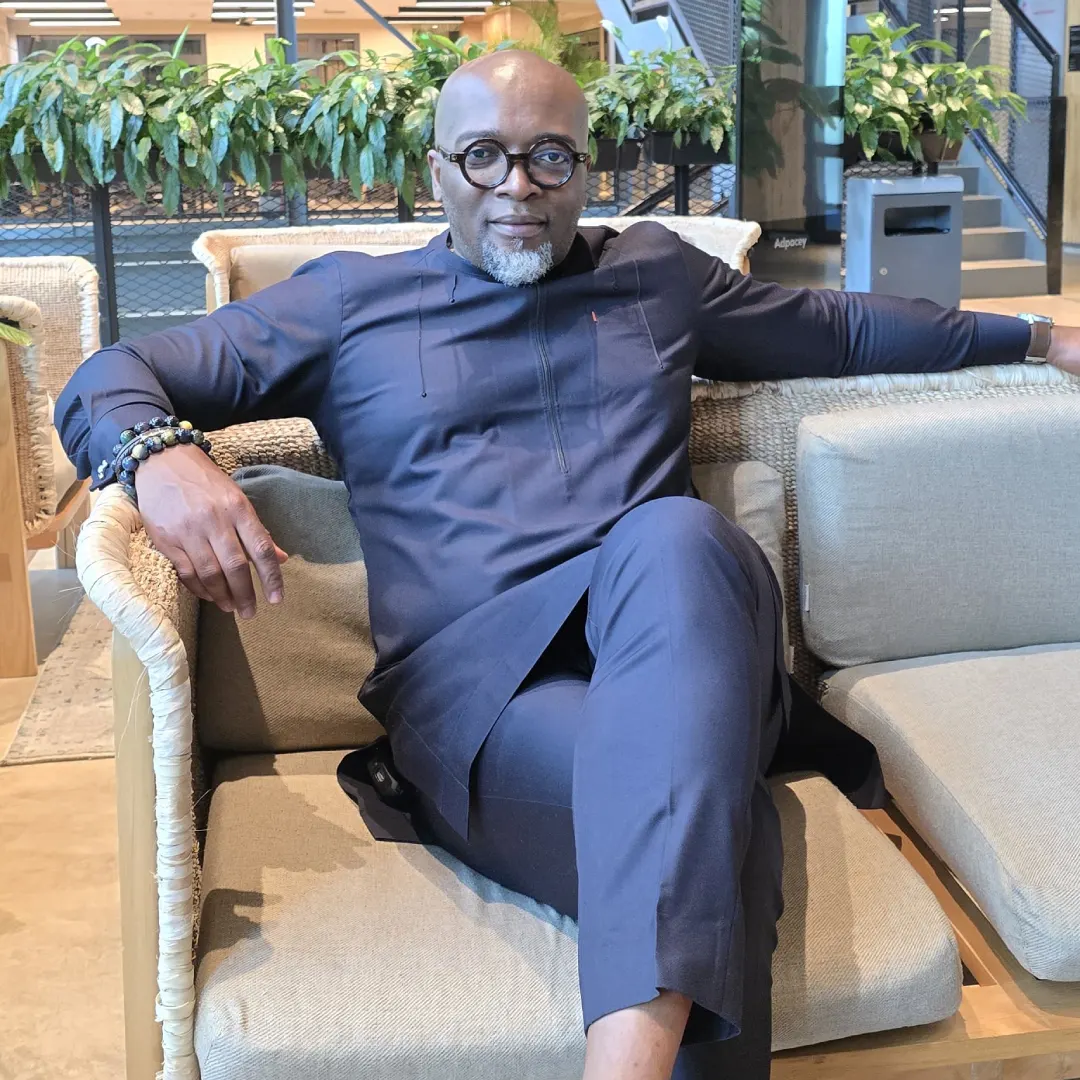
Phil S. Agbeko
Global Education & Fulbright Strategist
Kwame-Michael Brako is an award-winning Creative Director, VFX Artist, Animator and Founder of BrakoVerse Media, with over 20 years of experience across film, gaming, and animation. His Hollywood credits include The Avengers, Godzilla and GI Joe, where he contributed to visual effects and stereoscopic production, while also working across the gaming industry to create immersive real-time experiences. Today, he's bringing that global expertise back to Ghana with a mission to contribute to the country's animation, VFX, and gaming industries by training the next generation of creators and building world-class creative opportunities locally, while creating his own animations and films.
Jacqueline Ward-Brew is an educator, curriculum specialist, educational consultant, and Founder and Executive Director of Abura Kids International Inc. With more than 15 years of experience in education, her work focuses on curriculum development, literacy, culturally responsive teaching, instructional leadership, and professional learning for educators.
Her work extends to Ghana, where she currently provides ongoing mentorship and professional learning to teachers in a rural school, supporting instructional practice and student learning. Through Abura Kids International, she plans to expand this work to additional schools and communities.
Jacqueline’s long-term vision is to establish an early childhood school and teacher training center in Ghana that will also serve as a lab school, creating opportunities for educators to engage with current educational research, observe effective classroom practice, and receive ongoing mentorship and support.
Born in Ghana and raised in the United States from a young age, Jacqueline looks forward to returning to Ghana and contributing more directly to its educational landscape. She is passionate about developing both educators and young people and creating opportunities that strengthen confidence, capacity, leadership, and lasting impact.
Rand is widely known for her work as co-lead counsel for the families of Trayvon Martin and Michael Brown, cases that shaped a national conversation on justice and equality. She also served as international legal counsel to the family of George Floyd, representing them before the United Nations in a case that led to adoption of the landmark George Floyd Resolution on human rights and policing.
As the founding attorney of RAND LAW, L.L.C., based in Miami, Rand focuses on civil and human rights, catastrophic injury, and wrongful death litigation. Her advocacy extends globally—she is also a law professor and has lectured at Harvard Law School, University Mohammed V in Morocco, and the University of the West Indies, and advised Morocco’s Supreme Court on integrating international human rights standards into its judicial system. Rand has served as an adjunct professor at the University of Miami School of Law, where she teaches innovative courses exploring law and social impact, and she is annual teaching faculty in Harvard Law School’s Trial Advocacy Workshop. Most recently, Rand was hosted by a Parliament member in the United Nations where she addressed families of loved ones killed due to police violence.
Rand is also a frequent legal analyst for television and various media sources and has appeared on CNN, ABC, MSNBC, NBC, Fox News, BBC, Sky News, Al Jazeera; her reach is truly global and she has appeared on television, print media, and radio on every Continent except Antartica.
Rand’s life work underscores the strength of individual purpose in international promoting human rights and advancing justice. She practices law not only as a profession, but with the understanding of a profound responsibility to shape a society rooted in respect and equality. Rand is the co-founder of Future of Justice, alongside attorney Benjamin Crump, Esquire, an organization that confronts various human rights abuses throughout the world with an emphasis on racial discrimination.
Caroline K. Rushingwa, MPP, is an international education and partnerships strategist with over two decades of experience spanning education, diplomacy and trade. A multilingual, multi-award-winning change agent, she has built and led high-impact partnerships that expand educational access and strengthen ties between institutions, governments and nations across Africa, Europe and beyond.
Over her career she has worked with institutions and organisations including the University of Warwick, the United Nations, the Tony Elumelu Foundation and the Alliance of Democracies Foundation. Caroline holds a Master of Public Policy from the University of Warwick, an Executive Diploma in Diplomacy from the European Academy of Diplomacy, and a BSc in International Relations and French.
Congolese-born and British-based, she has studied and worked across the UK, France, the USA, Poland and the Democratic Republic of Congo, giving her a lived understanding of international education from both a professional and a student perspective. Known as a super-connector and conversation strategist, Caroline is a committed advocate for youth empowerment and for redefining Africa's growth through education and collaboration.
Mikidadu Mohammed is a financial, energy, and transportation economist. He is currently the Chief Economist at CCLX Consult in Washington DC. Prior to joining CCLX Consult, he was an economist at the U.S. Department of Transportation. Before his economist role at the U.S DOT, he was Associate Professor of Economics at Austin College and the Principal Investigator of the Oil and the Macroeconomy Research Program. He was also a Visiting Scholar at the University of Texas at Dallas and the Co-Director of the Federal Reserve Bank of Dallas Economics Scholar Program.
Mikidadu Mohammed is best known for his work on energy markets, inflation, and exchange rates, and their effects and linkages with the macroeconomy. Over the years, he has dedicated his career to the study of different aspects of the economy and energy markets, especially the impact of energy market shocks and the safe and efficient transportation of energy commodities to ensure stable prices, maximum employment, and sustained economic growth.
From the beginning of his journey, Mikidadu Mohammed seemed drawn to the places where numbers meet human lives, where economic theory collides with the real world. His early work as a Research Analyst at the Kem C. Gardner Policy Institute exposed him to the practical side of economics: how policy decisions ripple through communities, how data tells stories, and how the right question can matter as much as the right answer.
As he moved into academia, Mikidadu Mohammed developed a reputation for being both a rigorous thinker and a deeply engaging professor. At the University of Utah, where he taught economics from 2013 to 2017, students described him as an organized, dedicated, and lighthearted professor committed to making complex ideas accessible to students.
In 2017, he joined Austin College, where his influence grew quickly. He taught courses in international finance, macroeconomics, predictive analytics, international trade, and many more, grounding each subject in real-world relevance. His teaching philosophy centered on two principles: cultivating independent thinkers and igniting curiosity about how economics can solve real societal problems.
During his six years at Austin College, he rose from an Assistant Professor of Economics to become the Jack B. Morris Endowed Associate Professor of Economics and Policy. He also led the Oil and the Macroeconomy Program, and Co-directed the Economics Scholars Program at the Federal Reserve Bank of Dallas.
But Mikidadu Mohammed's intellectual curiosity extended far beyond the classroom. His research explored some of the most pressing questions in global economics: How do oil price shocks shape national economies?; How do expectations about future inflation affect current inflation?; How do countries manage interest rates while also dealing with fluctuating exchange rates and rising inflation? How does electricity access affect infant mortality? How do green taxes trigger structural shifts in energy consumption?; How does income distribution in a country affect economic activity?; How resilient are countries to financial stress?; and What happens to an economy if energy prices, commodity prices, production, exchange rates or financing costs move materially against the fundamentals of the economy? His work has been cited over 100 times, reflecting a growing influence in fields like energy economics, public finance, and macroeconomic performance.
In 2021, he published his book, The Economics and Finance of Commodity Price Shocks, a synthesis of years of research into how volatile commodity markets shape global financial systems. The book was released by Taylor & Francis/Routledge and quickly became the handbook for analysts, researchers, students, investors, and professionals in the corporate, financial, and commodity markets as well in the policy circles.
By 2023, Mikidadu Mohammed transitioned from academia into policy work, becoming an Economist at the U.S. Department of Transportation. There, he applied his economic and analytical expertise to national transportation issues, an area where infrastructure, energy, and public policy intersect in complex and consequential ways.
He also led a number of projects to Africa including a financial technology app for sending money and making payments to individuals and businesses in Africa, an energy exchange program to replace old pre-1999 cars and minivans with new energy-efficient vehicles in Africa, and a micro chips partnership initiative to scout for countries in Africa with strong private sector businesses capable of manufacturing next generation micro chips for computers and data centers.
Recently he joined CCLX Consult as the Chief Economist where he leads the organization's economic research and policy analysis initiatives, overseeing the development and execution of high-impact economic studies for clients across industries, regions, and countries spanning North America, Africa, Europe, Caribbean, Middle East and Asia.
Today, Mikidadu Mohammed stands at the crossroads of research, teaching, and public service. His career reflects a consistent theme: a belief that economics is not just about markets or models, but about people. How they live, how they grow and thrive, and how thoughtful policy can improve their futures.
Phil S. Agbeko is a global education strategist, U.S. Department of State Fulbright Specialist, and Founder and CEO of Hilltop Global Group, an education consulting and advisory firm advancing Africa's role in global education and engagement.
His 25-year career spans international development, technology, and global strategy. He led investment, capacity-building and technology initiatives with the World Bank Group and Fortune 500 companies.
Through Hilltop, he has delivered global learning and faculty development programmes for more than 1,000 students and built partnerships with over 100 organisations across Africa and beyond. Phil was named to The PIE's 50 Voices of the Americas list in 2025 and was a finalist for the Outstanding Contribution award at The PIE Awards. He brings deep strategic and cross-cultural expertise to the GUBA Awards 2026 Student Edition Jury Panel.